
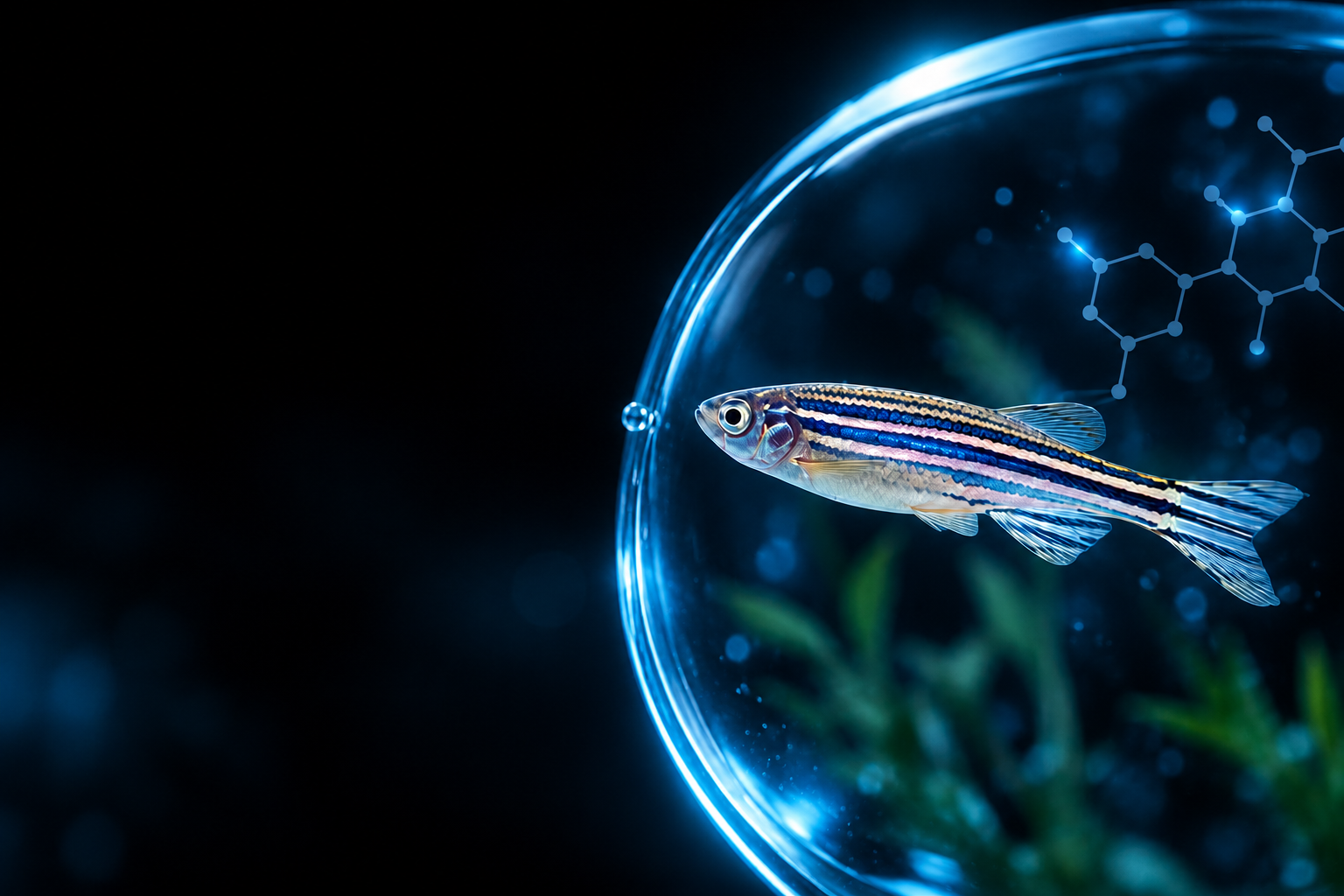
Sub Acute Toxicity in Zebrafish
What is Sub acute Toxicity in Zebrafish?
Sub-acute toxicity in zebrafish is the assessment of adverse effects caused by repeated or continuous exposure to a test substance for a period longer than an acute toxicity test (96 hours) but shorter than a chronic study, evaluating both lethal and sublethal toxic responses.
Study period: Fish are observed throughout the entire exposure period (commonly 7–28 days, depending on study objectives). Clinical and behavioral observations should be recorded at least once daily.
OECD Test Guidelines
OECD test guidelines governing subacute toxicity studies across oral, dermal, and inhalation routes of administration.
Principles
Controlled aqueous exposure to multiple concentrations of a test substance.
Evaluation of survival, development, growth, and sublethal toxic effects during prolonged exposure.
Determination of concentration–response relationships to establish toxicological endpoints such as NOEC,LOEC,ECx, and LCx.
Objectives
Each subacute toxicity study is designed to achieve specific scientific and regulatory objectives.
To evaluate the toxic effects of a test substance following repeated or prolonged exposure in zebrafish.
To assess the impact of the test substance on survival, growth, development, behavior, and general health of zebrafish.
To determine the concentration-response relationship and establish toxicological endpoints such as NOEC, LOEC, ECx, and LCx values.
Environmental Conditions
Controlled housing conditions are maintained throughout the study to minimize variability and ensure animal welfare compliance.
Routes of Administration
The route of administration is selected based on the intended use of the test substance and the applicable OECD guideline.
Aqueous Exposure: A method of exposure in which the test substance is dissolved or dispersed in water, allowing aquatic organisms such as zebrafish to absorb the substance directly from their surrounding environment through the gills, skin, and other body surfaces.
Suitable Product Types
Sub-Acute toxicity studies are essential for determining the safety profile of a wide range of products before clinical use or regulatory approval.
Chemical substances
Industrial chemicals
Plant protection products (pesticides)
Biocidal products and related active substances
Pharmaceutical compounds